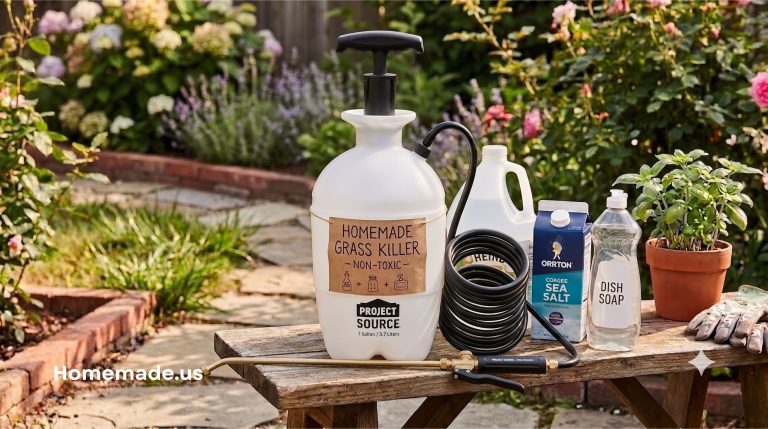
If you’re looking to clear stray grass out of driveway cracks, gravel paths, or garden edges without spraying heavy synthetic chemicals, a homemade spray is an effective, accessible alternative.
The most reliable DIY recipe relies on three simple ingredients you likely already have in your pantry: white vinegar, table salt, and liquid dish soap.
Here is a breakdown of how to make it, why it works, and how to apply it without harming the rest of your yard.
The Recipe
Ingredients
- 1 gallon of White Household Vinegar (5% acetic acid)
- 1 cup of Table Salt or Rock Salt
- 1 tablespoon of Liquid Dish Soap (e.g., Dawn)
How to Mix It
- Pour the 1 cup of salt directly into the gallon jug of vinegar.
- Cap the jug securely and shake it vigorously for 1–2 minutes until the salt completely dissolves.
- Add the 1 tablespoon of dish soap last. Stir or gently invert the jug; avoid shaking vigorously at this stage so it doesn’t foam up.
- Pour the mixture into a standard pump-pressure garden sprayer or a heavy-duty spray bottle.
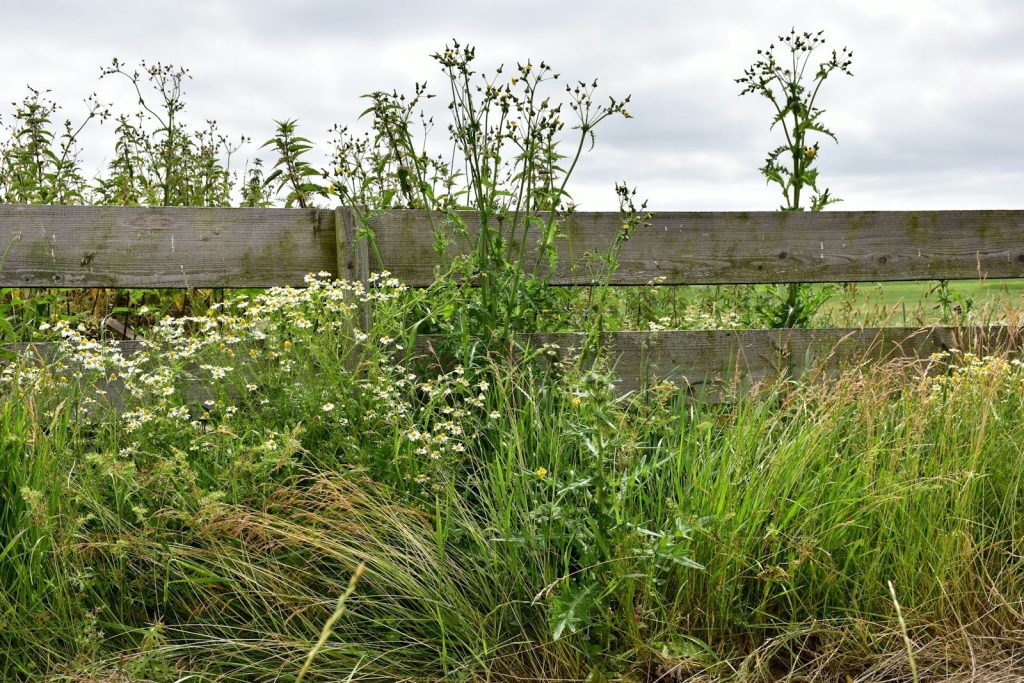
Why This Mixture Works (The Science)
This homemade formula functions as a contact herbicide (a top-down plant desiccant). According to research published in the South Dakota State University Extension guide on organic herbicides, each ingredient plays a specific functional role:
- Vinegar (Acetic Acid): The acid breaks down cell membranes on the leaf surface, causing the grass foliage to lose structural integrity and dry out rapidly.
- Salt (Sodium Chloride): Draws moisture straight out of the plant cells via osmotic pressure, supercharging the dehydration process.
- Dish Soap: Acts as a surfactant. Water-based liquids naturally bead up and roll off waxy grass blades; the soap breaks this surface tension, allowing the solution to cling tightly to the foliage long enough to do its job.
How to Apply It for Maximum Results
- Pick a Warm, Sunny Day: Apply mid-morning on a bright, hot day with minimal wind. Direct sunlight and high temperatures accelerate the drying process—you will often see grass turn brown and wither within 2 to 6 hours.
- Set Your Nozzle to a Pinpoint Stream: Avoid wide-mist settings. Fine mists float easily on the breeze and can accidentally damage nearby lawn grass or flowers you want to keep.
- Saturate the Leaves: Spray until the grass blades are thoroughly wet, but not dripping so heavily that the excess runs onto nearby soil.
⚠️ Three Important Warnings Before You Spray
- It is Non-Selective: This mixture does not distinguish between unwanted grass and your prize flowers or healthy turf. Anything green it touches will suffer leaf damage or die.
- Salt Sterilizes the Soil: Salt does not break down over time. If you spray this mixture into garden beds where you plan to plant flowers or vegetables later, the accumulated salt will prevent seeds from germinating or damage plant roots. Rule of thumb: Use the full recipe (with salt) only on hardscapes like gravel, brick pavers, and concrete cracks. If you are clearing grass near garden beds, omit the salt completely.
- It Doesn’t Kill Deep Roots Instantly: Unlike systemic chemical sprays (like glyphosate/Roundup), which travel into the root network, vinegar and salt primarily kill the top growth above ground. Deep-rooted, stubborn perennial grasses may send up new shoots after a week or two, requiring 2–3 applications to fully exhaust the root system.
Alternative Non-Toxic Options
If you need a non-toxic method for different parts of your yard, consider these alternatives:
- Boiling Water (Best for Hardscapes & Safe for Pets): Pouring a pot of boiling water directly over stray grass in sidewalk cracks destroys the leaf structure instantly with zero residual soil damage.
- Horticultural Vinegar (For Tough Perennial Grasses): Standard grocery store vinegar is 5% acetic acid. If you are fighting tough grasses, look for 20% or 30% Horticultural Vinegar at a garden center or online. Safety Note: According to the National Pesticide Information Center guidelines on acetic acid, concentrations over 11% can cause severe eye damage and skin burns. Always wear chemical-resistant gloves and protective eye goggles when handling high-strength formulations.
- Manual Sheet Mulching (Best for Garden Beds): If you are removing a patch of lawn to build a new garden bed, skip the spray altogether. Research from the USDA Agricultural Research Service on natural weed control shows that smothering unwanted foliage with light-blocking barriers is highly effective for long-term control. Cover the grass with overlapping layers of plain corrugated cardboard, wet it down thoroughly, and top it with 3–4 inches of wood mulch or compost to starve the grass of light within 4 to 6 weeks.
Conclusion
Creating a homemade, non-toxic grass killer is an easy, budget-friendly way to keep hardscapes and pathways clear without relying on synthetic chemicals. By understanding how the vinegar-salt-soap combination works and using salt strategically, you can effectively manage unwanted growth while keeping your soil and desirable plants safe.
For the best results, reserve the full recipe for areas like gravel, brick, and driveway cracks, pick a bright sunny day to spray, and stay persistent with stubborn roots. With a little timing and care, you can maintain a neat, weed-free outdoor space naturally.
© 2026 by Homemade.us. All rights reserved. No part of this document may be reproduced or transmitted in any form or by any means, electronic, mechanical, photocopying, recording, or otherwise, without prior written permission.

Author: Editor
Make it the best! That is Homemade!
Leave a Reply